


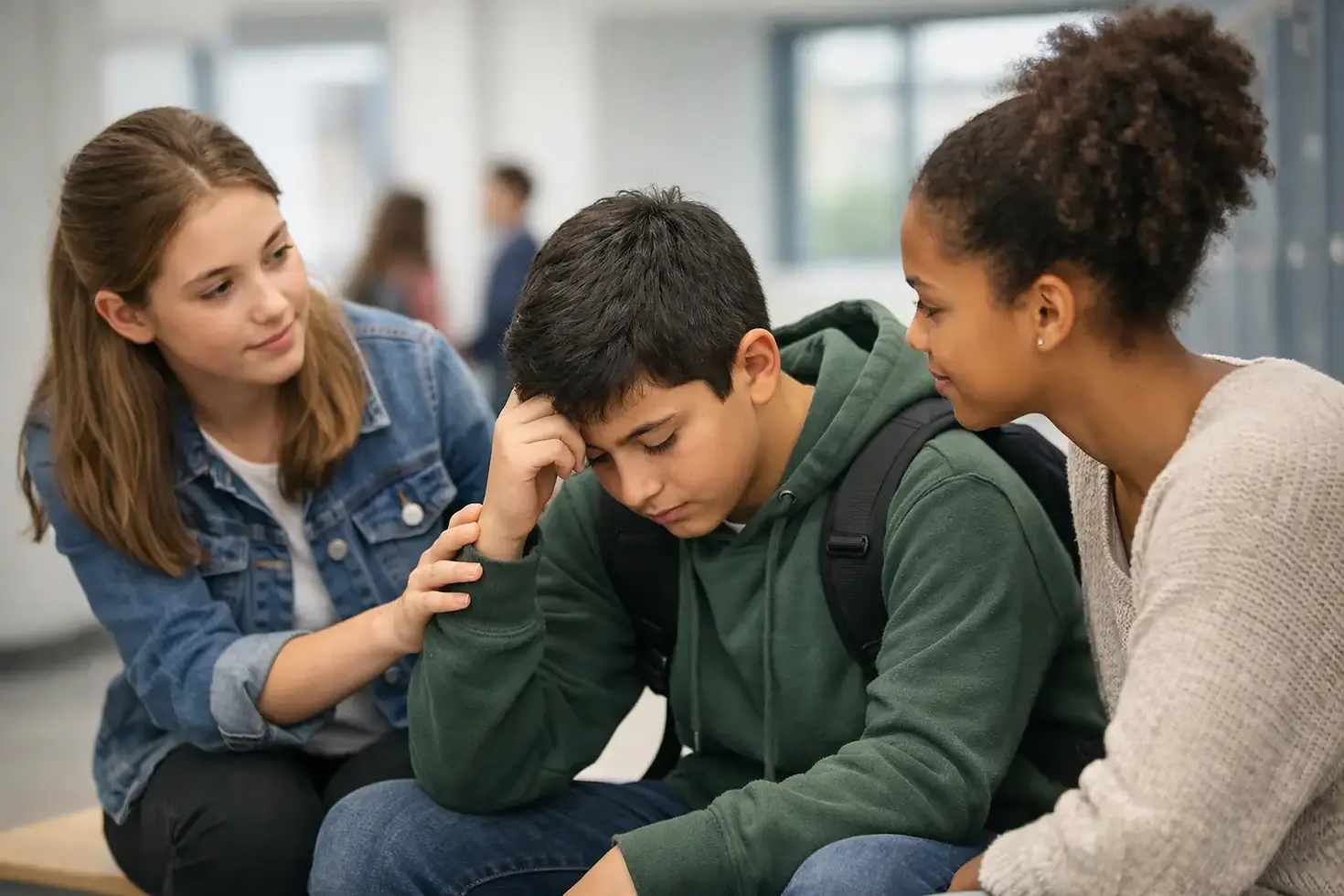
How to Build Student Empathy at School

A student gets laughed at in the hallway, and half the damage comes from the people who say nothing. That is why learning how to build student empathy matters so much. Empathy is not a soft extra. In a school community, it can be the difference between a student feeling seen or feeling alone, between a hurtful moment ending quickly or growing into something far more serious.
For schools trying to prevent bullying, cyberbullying, and isolation, empathy has to be treated as a daily practice. Students need more than a poster about kindness or a one-time theme week. They need adults who model respect, classrooms where perspective-taking is taught on purpose, and clear expectations about what it means to care for other people when it is inconvenient, unpopular, or happening online.
How to build student empathy in real school life
The first mistake many schools make is treating empathy like a personality trait. It is not. Some students may seem naturally warm or socially aware, but empathy is also a skill. Like any skill, it gets stronger with repetition, correction, and meaningful feedback.
That matters because students are still developing socially and emotionally. A middle school student may understand that bullying is wrong and still join in because they want approval. A high school student may recognize that a classmate is hurting and still stay silent because they are afraid of becoming the next target. Empathy does not erase peer pressure, but it helps students pause long enough to ask a different question: What is this doing to the other person?
Schools can teach that pause. They can make it visible, expected, and part of everyday culture.
Start with emotional honesty, not slogans
Students can spot empty messaging quickly. If adults talk about kindness in polished language but ignore humiliation, exclusion, gossip, and online cruelty when they happen, students notice. They learn that the school wants the appearance of care, not the work of it.
Building empathy starts with honest conversation. Students need adults who can name behavior clearly. Mocking someone in a group chat is harmful. Sharing an embarrassing image is harmful. Freezing someone out on purpose is harmful. Telling students the truth about impact is more effective than giving them vague encouragement to be nice.
This is also where story matters. Real stories help students connect actions to consequences. When students hear what bullying, ridicule, or social isolation can do to a young person over time, empathy becomes less abstract. It stops being a classroom word and becomes a human responsibility.
Teach perspective-taking before a crisis happens
Many students are asked to show empathy only after harm is done. That is too late. Perspective-taking should be built into ordinary instruction, advisory periods, counseling work, and classroom discussion.
A simple shift helps: instead of asking only, "What happened?" ask, "How might this have felt to each person involved?" That question works in literature classes, history discussions, health lessons, and conflict resolution. It teaches students to look beyond their own immediate reaction.
This does not mean every student will respond the same way. Some students are guarded. Some have their own pain. Some struggle with social cues. Empathy instruction should be patient and concrete. Ask students to notice facial expressions, tone, silence, changes in behavior, and the difference between intent and impact. Those are teachable habits.
How to build student empathy without lowering accountability
Schools sometimes worry that focusing on empathy will weaken discipline. In practice, the opposite is often true. Empathy and accountability work best together.
A student who has hurt someone should be expected to understand the impact of that behavior. That is not the same as excusing it. Restorative conversations, when used well, can help students face the real effects of their choices. But not every situation should be handled the same way. Severe bullying, harassment, threats, or repeated cruelty need firm consequences and adult intervention. It depends on the nature of the harm and the safety of the students involved.
The point is not to make students feel bad for a moment. The point is to help them take responsibility in a way that changes future behavior. Empathy becomes meaningful when it leads to action: stopping, apologizing, repairing, including, reporting, and doing better.
Make bystanders part of the conversation
In most bullying situations, the social environment matters as much as the person doing the harm. Students watch. They laugh, repost, ignore, or quietly disagree and move on. That space around the incident often decides whether cruelty gains power.
If schools want to know how to build student empathy in a way that reduces bullying, they have to address bystander behavior directly. Students need specific language for what they can do. That may mean checking on a peer privately, refusing to pile on, reporting a threat, saving evidence of cyberbullying, or telling a trusted adult when something feels serious.
Not every student is ready to intervene publicly, and schools should not shame students for fearing retaliation. But they can give students safer options and repeat a clear message: doing nothing also has an effect. Students do not need to be heroes in every moment. They do need to understand that their choices matter.
Adults have to model the culture they want
Students learn empathy from what adults permit, reward, and overlook. If staff members are sarcastic with students, dismissive of student concerns, or selective about whose pain gets attention, empathy lessons will not stick.
This is especially important in moments that feel small to adults but not to students. Eye-rolling, public embarrassment, exclusion from a table, a cruel comment dressed up as a joke, a social media post that spreads fast over one weekend - these things shape whether students believe school is emotionally safe.
A strong school culture does not require perfection. It requires consistency. Students should hear adults use respectful language, correct harmful behavior calmly, and take reports seriously. They should also see adults admit mistakes. That matters. When adults practice accountability, students learn that empathy includes humility.
Include online behavior in every empathy effort
It no longer makes sense to separate school climate from student digital life. Much of the harm students experience now happens through phones, group chats, gaming platforms, and social media. A student may leave campus at 3 p.m. and walk straight into another round of humiliation online.
That means empathy education has to include digital choices. Students need help understanding that a screen does not reduce harm. Forwarding, commenting, screenshotting, excluding, impersonating, and piling on are not harmless because they happen online. In some cases, digital cruelty lasts longer because it can be repeated, shared, and revisited.
Parents and schools both play a role here. Students need boundaries, supervision that fits their age, and repeated conversations about what responsible online behavior looks like. They also need to know when online behavior crosses the line into something that requires immediate adult involvement.
Ryan's Story has shown many school communities that when students hear a real account of bullying and online cruelty through the lens of loss and prevention, the message lands differently. The lesson is not fear. It is responsibility.
Give students practice, not just information
Assemblies, advisories, and classroom lessons can open the door, but empathy grows through repetition. Students should have regular chances to practice listening, noticing, and responding.
That can happen through peer mentoring, guided discussion, reflective writing, small-group problem solving, and classroom norms that make room for disagreement without disrespect. It can also happen when students are asked to repair harm in developmentally appropriate ways.
Still, schools should be realistic. One lesson will not transform every student. Some will resist. Some will perform empathy in front of adults and behave differently with peers. That is why culture change takes time. The goal is not a perfect school. The goal is a school where cruelty is less normalized, students are more likely to speak up, and isolated students are more likely to be noticed before the damage deepens.
Watch for the students empathy work can miss
Even in caring schools, some students remain hidden. They may be embarrassed to ask for help, worried about retaliation, or convinced that adults will not understand. Others may be struggling with depression, anxiety, trauma, or suicidal thoughts that their peers cannot see.
That is why empathy cannot replace a strong support system. Students need trusted adults, clear reporting pathways, accessible counseling support, and direct instruction on warning signs and help-seeking. Empathy helps create a safer climate, but safety also depends on systems. Schools need both.
When students learn to notice one another more carefully, they are more likely to catch the quiet changes that matter - a classmate withdrawing, giving things away, posting alarming messages, or suddenly seeming hopeless. Those moments should never be left to students alone, but empathetic peers can become the bridge to adult help.
If your school is serious about how to build student empathy, keep it simple and steady. Tell the truth about harm. Teach perspective-taking. Hold students accountable. Include online behavior. Model respect. Give students safe ways to act when someone is being targeted.
Empathy will not solve every problem in a school. But it can change what students do in the moments that matter most, and sometimes that change is exactly what protects a life.


Comments