


Best Middle School Assembly Programs for Student Engagement and Lasting Impact

A middle school assembly can fade from memory by the end of the day, or it can become the moment students keep talking about for months.
The difference usually comes down to fit. The best programs respect the age group, connect to school goals, and give students something they can actually use. Middle school students are old enough to spot a canned message, but still young enough to be deeply shaped by the right story, performance, or shared experience.
Strong assemblies do more than fill a calendar slot. They help schools build community, support social and emotional learning, address hard topics, and create a shared language among students and staff. For educators choosing the best middle school assembly programs, the goal is not to find the flashiest option. The goal is to choose programs that students will remember for the right reasons.

What makes a middle school assembly worth the time
Every school has different needs, but the strongest assembly programs tend to share a few core traits. They are purposeful, age-appropriate, and built around student engagement rather than passive listening.
A good assembly should pass three basic tests.
Selection criteria | What to look for | Why it matters |
Educational value | Clear learning goals, relevant themes, follow-up materials, alignment with school priorities | Students need more than inspiration. They need concepts, language, and next steps. |
Engagement level | Stories, interaction, visuals, music, movement, questions, or real-world scenarios | Middle school students tune in when the format respects how they learn. |
Diversity of topics | Programs that cover character, mental health, bullying prevention, STEM, arts, digital citizenship, leadership, and wellness | A strong assembly calendar supports the whole student, not just one issue. |
Age fit | Content designed for grades 6 to 8, with the right tone and examples | Middle school students need honesty without being talked down to. |
Follow-up potential | The assembly has more impact when adults reinforce the message later. |
The best programs also leave room for the school’s culture. A rural middle school, a large suburban campus, and an urban charter school may all need different examples, pacing, and follow-up. A strong presenter understands that and adapts without watering down the message.
Schools should also ask one practical question before booking any assembly: What do we want students to do differently after this program?
If the answer is unclear, the assembly may entertain, but it may not create lasting impact.
Programs that meet students where they are
Middle school is a unique stage. Students are building identity, testing social boundaries, and becoming more aware of peer judgment. A program that works beautifully for elementary students may feel too childish. One designed for high school may feel too intense or abstract.
The most effective assembly programs for this age group usually fall into several categories.
Character and kindness programs
These programs focus on empathy, respect, responsibility, and choices. The best ones avoid vague slogans and use concrete situations students recognize.
For example, a strong kindness assembly might ask:
What does exclusion look like at lunch?
How does a joke change when someone becomes the target?
What should a bystander do when a group chat turns cruel?
How can students repair harm after they make a mistake?
Schools often report success with character programs when they connect the assembly to a wider school effort, such as advisory lessons, peer leadership, or monthly character themes. Students need to see that kindness is not a one-day message. It is part of how the school operates.
Bullying prevention and digital citizenship programs
Bullying prevention remains one of the most requested assembly topics, especially when it includes online behavior. Middle school students often face problems that move between hallways, phones, games, and group chats.
A strong program does not simply say, “Don’t bully.” Students have heard that before. Better programs help students understand:
The difference between conflict, teasing, bullying, and harassment
How digital messages can spread faster than intended
Why silence from bystanders can feel like approval
How to get help without feeling like they made things worse
What repair and accountability can look like
This is where real stories can be powerful, as long as they are handled with care. The message should be honest, not sensational. Students should leave with support, hope, and a clear path to talk with trusted adults.
Mental health and wellness programs
Many middle schools now choose assemblies on stress, resilience, anxiety, grief, belonging, and help-seeking. These topics need careful planning. The presenter should use safe language, avoid graphic details, and coordinate with counselors before and after the event.
The best wellness programs normalize struggle without making it seem hopeless. They also remind students that asking for help is a strength. When the school counseling team follows up with classroom visits, small-group support, or resource cards, the assembly becomes part of a larger safety net.
STEM, arts, and career exploration programs
Not every assembly needs to address a crisis. Some of the best programs spark curiosity.
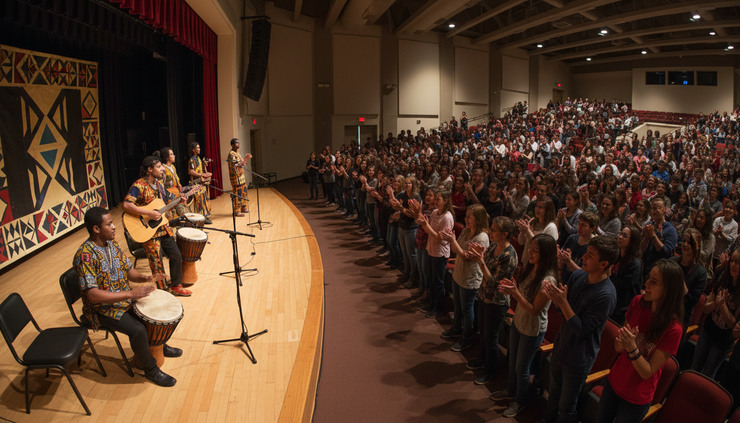
STEM shows, author visits, music performances, theater groups, science demonstrations, and career panels can all work well for middle school students when they are interactive. A robotics demonstration becomes more memorable when students help solve a problem. A music assembly has more impact when students learn the history and rhythm behind the performance. An author visit lands better when students read an excerpt beforehand and come ready with questions.
These programs broaden students’ sense of what is possible. They also reach students who may not connect as strongly with traditional motivational talks.

Why Ryan’s Story reaches middle school students
One of the most widely recognized examples of a powerful bullying prevention and suicide awareness assembly is Ryan’s Story, shared by John Halligan, the father of Ryan Patrick Halligan.
Ryan died by suicide in 2003 after experiencing bullying and cyberbullying. John Halligan has since spoken to students, educators, and families about Ryan’s life, the impact of peer cruelty, and the importance of kindness, help-seeking, and responsible technology use.
What makes Ryan’s Story especially strong for middle school audiences is John Halligan’s method. He does not rely on shock value. He leads with a father’s love, a real child’s story, and a clear message about everyday choices.
His approach works because it combines emotional truth with practical lessons.
The story is personal without being careless
Middle school students respond to real stories. They can tell when a speaker is reading a script. John Halligan speaks as a parent, which gives the program emotional weight. At the same time, the best versions of this kind of assembly avoid turning tragedy into spectacle.
That balance matters. Students need to understand that words and actions can cause deep harm, but they also need to leave with hope and support. Ryan’s Story can open a door for serious conversations about bullying, mental health, peer pressure, and the role of adults.
The message connects online behavior to real life
Students sometimes separate digital behavior from face-to-face behavior. A cruel message can feel less serious when it is typed into a phone. Ryan’s Story helps students see that online choices affect real people.
That lesson is especially important in middle school, when students are still learning impulse control, empathy, and social judgment. The assembly gives schools a way to talk about screenshots, rumors, group chats, exclusion, and digital pile-ons in language students understand.
The program speaks to bystanders
Many bullying prevention efforts focus only on the student causing harm and the student being harmed. Ryan’s Story also speaks to the larger peer group.
That is a major strength. In many situations, the bystanders shape the outcome. Students who laugh, share, stay silent, or speak up all affect the climate. A strong assembly helps students see that they have choices before, during, and after harm occurs.
The follow-up can involve the whole school community
Ryan’s Story often works best when schools prepare students ahead of time and follow up afterward. Counselors, teachers, and administrators can use the assembly as a starting point for:
Advisory discussions about empathy and digital responsibility
Lessons on how to report concerns
Parent conversations about phones and online behavior
Staff reminders about warning signs and student support
Peer leadership projects focused on inclusion
Schools that describe strong results from programs like Ryan’s Story often point to the same pattern. The assembly gave students a common reference point. A teacher could say, “Remember what we heard in the assembly,” and students knew exactly what that meant.
A common theme in school feedback after powerful story-based assemblies is that students continue the conversation later, in classrooms, hallways, and counseling offices. That continued conversation is often where the deeper work begins.
Because Ryan’s Story deals with suicide and bullying, schools should plan carefully. Counselors should be available, staff should know the content in advance, and families may benefit from a note explaining the topic and available supports. That care does not weaken the program. It helps students process the message safely.

How to compare assembly programs before booking
A polished website or exciting highlight video can help, but schools need more than promotional material. Before booking, decision-makers should compare programs through a practical lens.
Start with these questions.
What is the main learning goal
A program should be able to state its purpose in one clear sentence. For example:
Students will understand how to respond when they witness bullying.
Students will learn how stress affects decision-making and how to ask for help.
Students will see how science connects to real-world problem solving.
Students will understand how music reflects history and culture.
If the goal sounds too broad, ask for details. “Inspire students” is a fine outcome, but it should not be the only one.
Is the program built for middle school students
Ask whether the presenter regularly works with grades 6 to 8. Middle school students need pacing, stories, humor, and directness, but they also need care. Programs should avoid babyish language and avoid content that belongs in high school.
Good signs include:
Examples based on lunchrooms, bus rides, group chats, teams, games, and friendships
Time for student questions or reflection
Clear language without long lectures
Respect for students’ intelligence
A plan for students who may feel emotionally affected
How interactive is the experience
Engagement does not always mean loud. A powerful assembly can be quiet and reflective. Still, students should not feel like they are invisible for 50 minutes.
Interaction can include:
Guided questions
Short student responses
Demonstrations
Movement
Music
Reflection cards
Peer-to-peer discussion
Scenario-based decision-making
The key is that interaction should serve the message. Random crowd participation may create energy, but it does not always create learning.
What materials support follow-up
Ask for teacher guides, family resources, discussion prompts, or recommended next steps. If the program does not provide materials, the school can still create its own, but built-in support helps.
A simple follow-up plan might include:
A short advisory discussion the next day
A student reflection form
A staff email with key language from the assembly
A family newsletter with conversation starters
A counselor check-in option for students who want to talk
Without follow-up, even a strong assembly can become a one-time event. With follow-up, it becomes part of school culture.
What do other schools say
Testimonials are useful when they describe specific outcomes, not just general praise.
Less helpful feedback sounds like:
“Great program. Students loved it.”
More useful feedback sounds like:
“Our seventh graders referred back to the assembly during advisory lessons, and several students asked counselors how to handle problems in group chats.”
Schools that have implemented strong programs often report success in practical ways. Teachers notice students using the program’s language. Counselors may see more students willing to ask for help. Administrators may find that the assembly gives them a shared reference point when addressing behavior.
When reviewing testimonials, look for comments about:
Student attention during the program
Quality of post-assembly discussions
Fit for middle school maturity levels
Responsiveness of the presenter
Usefulness of follow-up materials
Care taken with sensitive topics
If possible, ask the presenter for references from schools similar in size or setting. A program that worked well in a small private school may still work in a large public middle school, but the logistics and delivery style may need adjustment.
Building a balanced assembly calendar
The strongest schools do not rely on one assembly to carry the full weight of student engagement. They build a thoughtful mix across the year.
A balanced assembly calendar might include:
Fall belonging and respect program Helps set expectations for school culture early.
Digital citizenship or bullying prevention program Gives students tools for online and in-person peer conflict.
Arts, music, or cultural performance Expands student experience and celebrates creativity.
STEM or career exploration event Connects learning to future possibilities.
Wellness and resilience program Supports emotional health before high-stress times of year.
This variety matters. Students should hear messages about character and safety, but they should also experience joy, creativity, curiosity, and cultural learning. Diversity of topics keeps assemblies from feeling repetitive and helps different students connect at different times.
Schools can also improve impact by matching assemblies to existing initiatives. If the school is working on attendance, a motivational speaker may connect the message to belonging and future goals. If the school has seen an increase in online conflict, a digital citizenship program may be more urgent. If students seem disengaged from academics, a high-energy STEM assembly or author visit may help rebuild curiosity.
The programs that last are the ones schools reinforce
The best assembly is not always the biggest production. It is the one that fits the students, supports the school’s goals, and gives everyone a shared message to return to.
Programs like Ryan’s Story show how powerful a real story can be when it is shared with care. John Halligan’s approach reaches students because it is personal, direct, and grounded in choices they recognize. It helps schools talk about bullying, cyberbullying, empathy, and help-seeking in a way that feels real rather than routine.
When choosing a middle school assembly program, look for three things above all: clear educational value, genuine student engagement, and topics that reflect the full range of student needs. Then plan the follow-up before the presenter ever arrives.
That is how an assembly becomes more than an event. It becomes a turning point students can remember, discuss, and act on.

Comments